Introduction to Industrial Gas Analyzers
An industrial gas analyzer or industrial gas analyser is a professional instrument designed to detect, measure, and analyze the composition of gases in industrial processes, combustion systems, exhaust streams, and other demanding environments. Industrial gas analyzers are used by facilities that need reliable information about gas concentrations for process control, emissions monitoring, combustion optimization, safety, and environmental compliance.
Depending on the application, an industrial gas analyzer or an industrial gas analyser can measure gases such as oxygen (O₂), carbon monoxide (CO), carbon dioxide (CO₂), methane (CH₄), hydrogen sulfide (H₂S), nitrogen oxides (NOₓ), sulfur dioxide (SO₂), and other gases. Industrial gas analysis provides operators and technicians with data that can be used to improve efficiency, identify potential problems, monitor emissions, and maintain safer operating conditions.
Why Are Industrial Gas Analyzers Important?
An industrial gas analyzer or industrial gas analyser provides critical information about the gases produced, consumed, or released during industrial processes. Accurate gas measurements can help facilities identify changes in process conditions before they become larger operational problems.
Industrial gas analysis is also important for emissions monitoring and environmental compliance. Measuring gases released from combustion and manufacturing processes allows facilities to evaluate emissions and make informed decisions about process control and emissions reduction.
Gas analysis can also support combustion optimization. Measurements of oxygen, carbon monoxide, carbon dioxide, and other combustion gases can help technicians evaluate fuel-air ratios and combustion performance, potentially reducing wasted fuel and unnecessary emissions.
Types of Industrial Gas Analyzers
Industrial gas analyzers or industrial gas analysers are available in different configurations depending on the application, gases being measured, required measurement frequency, and operating environment. Portable, stationary, combustion, biogas, and emissions analyzers can each address different industrial measurement requirements.
Portable Industrial Gas Analyzers
A portable industrial gas analyzer or industrial gas analyser provides technicians with the flexibility to perform measurements directly at the equipment or process being evaluated. Handheld analyzers or gas analysers are useful for commissioning, maintenance, troubleshooting, spot checks, and emissions testing.
Portable systems can be transported between multiple testing locations and may measure several gases simultaneously. MRU Instruments offers portable gas analyser equipment designed for applications where field measurements and mobility are important.
Stationary Industrial Gas Analyzers
Stationary industrial gas analyzers or industrial gas analysers are designed for fixed installations where continuous or long-term gas monitoring is required. These systems can be incorporated into industrial processes, emissions monitoring systems, and other fixed applications.
Stationary gas analyzers or gas analysers can continuously collect measurements and provide operators with ongoing information about process gases or emissions. Depending on the system, data can also be recorded for analysis, reporting, and process optimization.
Biogas Industrial Gas Analyzers
Biogas applications require specialized industrial gas analyzers or industrial gas analysers capable of measuring the composition of gases produced through anaerobic digestion and other biological processes. Common measurements include methane (CH₄), carbon dioxide (CO₂), oxygen (O₂), and hydrogen sulfide (H₂S).
MRU Instruments offers biogas analysis systems such as the NOVAplus BIOGAS and OPTIMAX Biogas. These systems use technologies including electrochemical sensors and NDIR measurement to provide multi-gas analysis for biogas, landfill gas, and CHP applications.
Combustion and Flue Gas Analyzers
Combustion and flue gas analyzers are a specialized type of industrial gas analyzer or industrial gas analysers designed to evaluate combustion processes. These instruments can be used with boilers, furnaces, engines, burners, and other combustion equipment.
By measuring combustion gases, technicians can evaluate combustion efficiency, troubleshoot equipment, monitor emissions, and make appropriate adjustments. Portable combustion analyzers are particularly useful for field testing and maintenance.
Gas Detectors
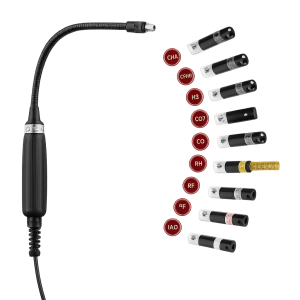
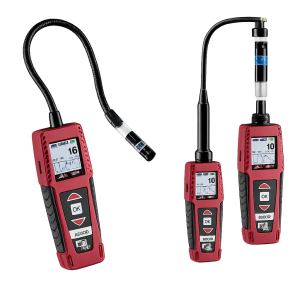
Gas detectors are another important category of industrial gas measurement equipment. Unlike a full gas analyzer or gas analyser that may provide detailed measurements of several gases, a gas detector is generally focused on identifying potentially hazardous concentrations and providing an alarm.
Portable gas detection equipment can be used to monitor combustible and toxic gases in industrial facilities, confined spaces, HVAC applications, and other environments where atmospheric hazards may be present.
Industrial Gas Analyzer Applications
MRU Instruments provides gas analysis solutions for a broad range of industrial applications. The appropriate industrial gas analyzer or industrial gas analyser depends on the process, gases being measured, operating conditions, and measurement requirements.
Cement Industry
Gas analysis and continuous emissions monitoring can help cement manufacturers monitor combustion processes and emissions associated with high-temperature production.
Glass Industry
Industrial gas analysis can be used to monitor combustion and emissions during glass manufacturing, where high-temperature processes require careful control.
Biogas, Landfill Gas, and CHP
Specialized industrial gas analyzers or industrial gas analysers can measure methane, carbon dioxide, hydrogen sulfide, oxygen, and other gases in biogas, landfill gas, and combined heat and power applications. These measurements can help operators evaluate gas quality, process performance, and emissions.
Refineries and Petrochemical Facilities
Refineries and petrochemical facilities can use industrial gas analysis for process monitoring, emissions measurement, combustion optimization, and safety applications.
Breweries
Gas analysis equipment can support combustion, process, and safety applications in breweries and other facilities where controlled gas measurement is required.
Power Plants
Power generation facilities can use industrial gas analyzers to evaluate combustion efficiency and monitor emissions from boilers, turbines, and other equipment.
Iron and Steel Industry
Gas analysis and continuous emissions monitoring can provide valuable information for high-temperature industrial processes and emissions control in iron and steel production.
Gas Turbines and Compressor Stations
Industrial gas analyzers or industrial gas analysers can be used to monitor combustion and emissions associated with gas turbines, compressor stations, and other energy infrastructure.
Universities and Laboratories
Gas analyzers and gas analysers can support research, testing, experimentation, and environmental monitoring in universities and laboratory environments.
HVAC and Boiler Applications
Portable gas analyzers and gas detectors are useful for HVAC technicians, boiler manufacturers, installers, and service professionals performing combustion testing, emissions measurements, and equipment diagnostics.
Gases Measured by Industrial Gas Analyzers
The gases measured by an industrial gas analyzer or an industrial gas analyser depend on the instrument and application. Different sensor technologies are available for different gases and concentration ranges.
Oxygen (O₂)
Oxygen measurement is important for combustion analysis, emissions monitoring, and certain industrial safety applications. Monitoring O₂ can help technicians evaluate combustion conditions and determine whether a combustion process is receiving the appropriate amount of air.
Carbon Monoxide (CO)
Carbon monoxide is produced by incomplete combustion and is an important measurement in combustion analysis and safety applications. An industrial gas analyzer equipped with an appropriate CO sensor can help technicians identify elevated concentrations and evaluate combustion performance.
Carbon Dioxide (CO₂)
CO₂ is commonly measured in combustion, biogas, and emissions applications. NDIR technology is frequently used for CO₂ measurement because it can provide accurate analysis across a broad range of concentrations.
Methane (CH₄)
Methane measurement is important in biogas, landfill gas, renewable natural gas, and other industrial applications. Measuring CH₄ can help operators evaluate gas quality, monitor processes, and identify potentially hazardous combustible gas concentrations.
Hydrogen Sulfide (H₂S)
Hydrogen sulfide is a toxic gas that can occur in biogas, wastewater, petroleum, and other industrial processes. An appropriate industrial gas analyzer or gas detection system can measure H₂S concentrations and provide information needed for process monitoring and workplace safety.
Nitrogen Oxides (NOₓ)
Nitrogen oxides are important combustion-related emissions. Measuring NO and NO₂ can help facilities evaluate combustion emissions and support emissions monitoring and control strategies.
Sulfur Dioxide (SO₂)
Sulfur dioxide can be produced when sulfur-containing fuels are burned. SO₂ measurement is therefore important in certain industrial combustion and emissions applications, including facilities that need to monitor sulfur-related emissions.
Hydrogen (H₂)
Hydrogen analysis can be important in applications involving hydrogen production, fuel systems, syngas, and other industrial processes. The appropriate measurement technology depends on the required concentration range and application.
Choosing the Right Industrial Gas Analyzer
Choosing the right industrial gas analyzer or industrial gas analyser starts with identifying the gases that need to be measured and understanding the conditions in which the analyzer will operate. Temperature, moisture, particulate matter, gas concentration, sampling requirements, and required measurement frequency can all influence equipment selection.
It is also important to determine whether a portable or stationary analyzer is appropriate. Portable systems are useful for field testing and troubleshooting, while stationary analyzers are better suited to continuous or long-term monitoring applications.
For emissions applications, facilities may also require a CEMS or other continuous emissions monitoring system capable of collecting, recording, and reporting measurements.
Industrial Gas Analysis from MRU Instruments
Gas analysis plays an important role in industrial safety, combustion optimization, emissions monitoring, process control, and environmental management. A properly selected industrial gas analyzer can provide the measurements needed to understand process conditions and make informed operational decisions.
MRU Instruments offers professional gas analysis equipment ranging from portable analyzers and gas detectors to stationary systems and emissions monitoring equipment. Our products are designed for applications involving combustion gases, biogas, landfill gas, industrial emissions, and other challenging gas measurement environments.
Explore the MRU Instruments product range to find an industrial gas analyzer or an industrial gas analyser suited to your application, or contact MRU Instruments for assistance determining the appropriate gas analysis solution.